A Structural Ontology of the Law
Law understood as a system of relations, roles, and repair.
A Structural Ontology of the Law is a framework for understanding law not as a collection of rules or outcomes, but as a structured system of authority, norms, institutional roles, facts, targets, legal effects, and mechanisms of repair. Its central claim mirrors that of The Geometry of the Good: to be legal is to be structurally situated.
Legal effects exist only when specific structural conditions are satisfied. Legal failure occurs when those conditions break down. By making these structures explicit, SOoL allows students, lawyers, and scholars to reason about law systematically and to understand justice as an emergent property of legal coherence rather than an external moral overlay.
Why Structure Matters in Law
Legal education often teaches doctrine first and structure implicitly. Students learn tests, standards, and holdings, yet struggle to see why the same kinds of problems recur across torts, contracts, criminal law, and constitutional law. SOoL reverses that order.
- Legal failure occurs in predictable ways.
- Those failures have identifiable structural causes.
- Structure can be taught, visualized, and operationalized.
The Core Components
The Minimum Legal Chain
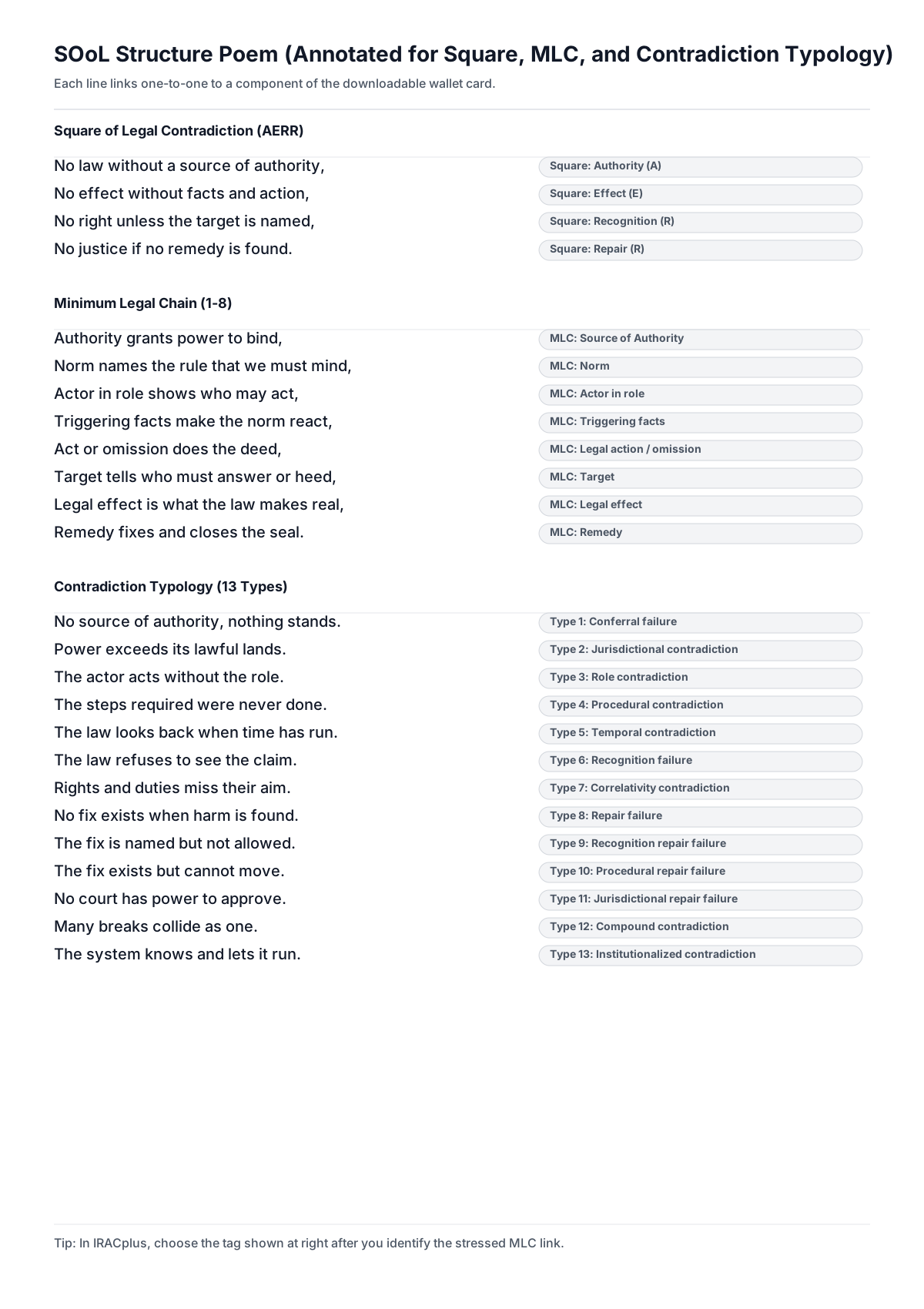
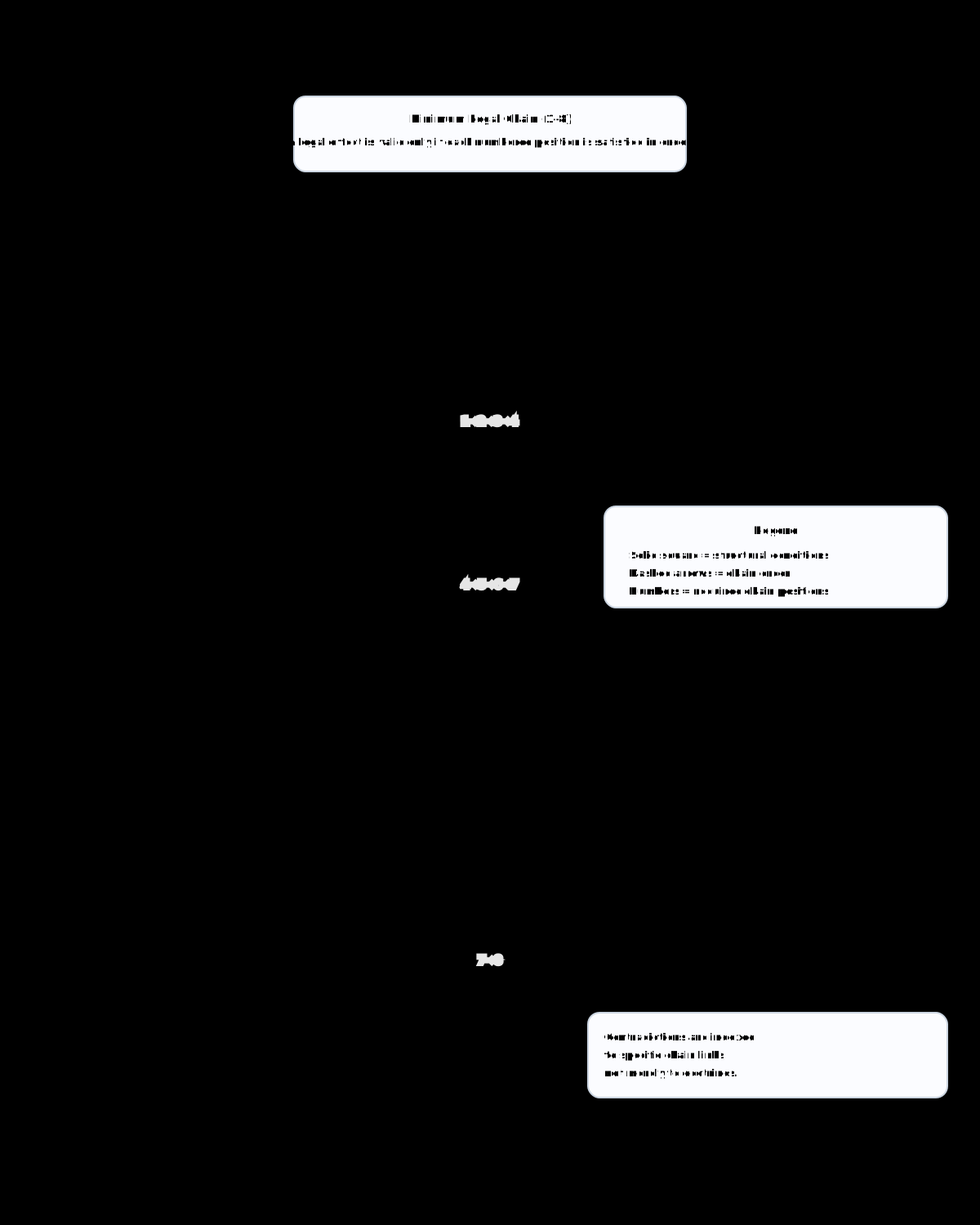
The Minimum Legal Chain identifies the necessary conditions for any legal effect to exist: authority, norm, role, triggering facts, legal action/omission, target, legal effect, and remedy are not optional features of law. They are the structure of legality itself.
The Square of Legal Contradiction
Legal contradictions are not random conflicts between rules. They cluster around four structural failures: authority, execution, recognition, and repair. The Square of Legal Contradiction visualizes these failures across doctrinal domains.
Contradiction Typology
The contradiction typology extends the square into a complete diagnostic system. Each contradiction type corresponds to a specific failure in the Minimum Legal Chain, from missing authority to institutionalized contradiction.
From Theory to Practice
- Read cases structurally. Identify which part of the legal structure is stressed.
- Build the Minimum Legal Chain. Locate where legality succeeds or fails.
- Diagnose contradiction. Classify the structural failure before applying doctrine.
- Use IRACplus. Translate diagnosis into disciplined legal analysis.
Tools and Teaching Aids
-
IRACplus
A guided legal reasoning tool that operationalizes SOoL and generates structurally grounded IRAC drafts. -
Formal Ontology and the SOoL Kernel
A bridge from the textbook’s ontology principles to computable artifacts, including the kernel OWL and structural offense mapping. -
Offense Mapping (searchable table)
Crimes, torts, and constitutional violations mapped to structural violation classes and chain failures.
Relation to the Textbook
A Structural Ontology of the Law provides the conceptual and pedagogical backbone of The Architecture of Justice. The book develops the ontological foundations of the framework, while this site focuses on visualization, application, and instruction.
Who This Is For
- First-year law students
- Pre-law and philosophy students
- Legal educators
- Researchers in legal theory and AI
- Anyone seeking a clearer understanding of how law works
Law is not mysterious. It is structured. Structure can be learned. And once learned, it changes how you see every case.